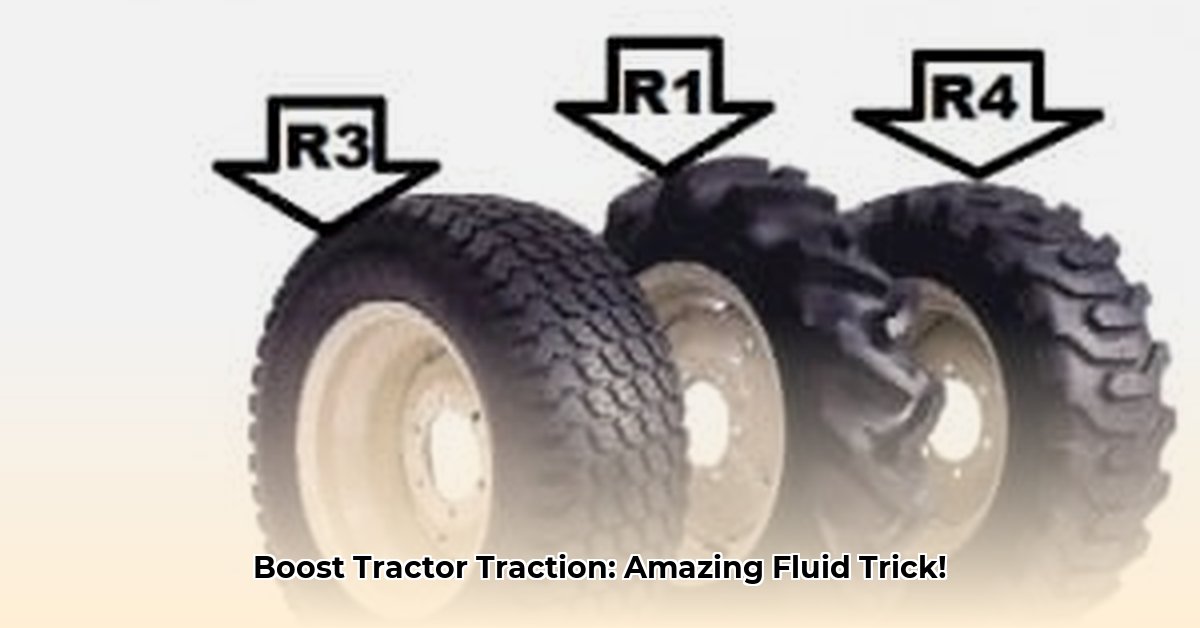
Choosing the right fluid for your tractor tires is crucial for maximizing traction, minimizing soil compaction, and protecting your investment. The wrong choice can lead to reduced efficiency, costly repairs, and environmental damage. This guide examines various options, helping you make an informed decision based on your specific needs and climate. For more detailed information, see our comprehensive guide: Tractor Tire Fluids.
Understanding Your Options: A Comparative Review
Several fluids can be used as ballast in tractor tires, each with advantages and drawbacks. Let's examine the key contenders:
Water: The Budget-Friendly Baseline
Water is the cheapest and most readily available option. Its simplicity is attractive, but its low freezing point (0°C or 32°F) renders it impractical in colder climates. Frozen water expands, potentially damaging tires. While cost-effective in warmer regions, its limited weight and susceptibility to freezing severely restrict its applicability. Is the minimal cost worth the seasonal limitations?
Pros: Inexpensive, readily available.
Cons: Freezes easily, low weight, provides minimal puncture protection.
Antifreeze (Propylene Glycol): A Balanced Approach
Antifreeze, specifically propylene glycol-based formulations, offers a superior alternative to ethylene glycol due to its lower toxicity. Propylene glycol provides excellent freeze protection, keeping tires functional even in sub-zero temperatures. However, it remains more expensive than water. Is the improved freeze protection and reduced toxicity worth the increased cost?
Pros: Excellent freeze protection, relatively low toxicity.
Cons: More expensive than water, requires responsible disposal.
Calcium Chloride: High Performance, High Risk
Calcium chloride is a heavy-duty option, providing excellent traction in challenging conditions like mud or snow. Its superior freeze resistance is another key advantage. However, its high corrosiveness poses risks to tires, potentially shortening their lifespan and necessitating more frequent replacements. Moreover, its environmental impact, particularly on soil health, remains a subject of ongoing research and debate among agricultural experts. Professor David Miller, Agricultural Engineering, Purdue University, notes, "While calcium chloride offers excellent traction, its corrosive nature and potential impacts on soil microbiota warrant careful consideration and responsible use."
Pros: Excellent traction and freeze protection.
Cons: Highly corrosive, potential negative environmental impacts, requires careful handling and disposal.
Beet Juice: The Eco-Friendly Choice
Beet juice emerges as a sustainable ballast solution. Its biodegradability and non-toxicity are significant advantages, minimizing environmental risks. However, it's more expensive than other options and its availability may vary depending on location. The freeze protection it provides may not be as effective as antifreeze or calcium chloride in extremely cold climates. Does the environmental benefit outweigh the higher cost and potentially reduced freeze resistance?
Pros: Biodegradable, non-toxic, environmentally friendly.
Cons: Higher cost, limited availability in some areas, moderate freeze protection.
Actionable Intelligence: Choosing the Right Fluid for Your Needs
The optimal choice depends on your specific circumstances. Consider these factors:
- Climate: Water is unsuitable for colder climates. Antifreeze or calcium chloride are preferable in freezing conditions.
- Budget: Water is the cheapest option, while beet juice and polyurethane foam are the most expensive.
- Environmental Concerns: Beet juice is the most environmentally friendly choice, while calcium chloride presents the highest risk.
- Tire Longevity: Calcium chloride’s corrosiveness can reduce tire lifespan.
The following table summarizes the key characteristics:
| Factor | Water | Antifreeze (Propylene Glycol) | Calcium Chloride | Beet Juice |
|---|---|---|---|---|
| Cost | Very Low | Moderate | Low | High |
| Freeze Resistance | Poor | Excellent | Excellent | Moderate |
| Toxicity | Low | Low | Moderate | Low |
| Environmental Impact | Low | Low | Moderate | Low |
| Corrosiveness | Low | Low | High | Low |
| Availability | Excellent | Excellent | Excellent | Varies significantly |
Filling Your Tires: A Step-by-Step Guide
- Assess: Evaluate your climate, budget, and priorities. Refer to the decision matrix above.
- Select: Choose the appropriate fluid based on your assessment.
- Consult: Review your tractor and tire manufacturer's guidelines for fluid type and filling procedures.
- Fill: Add the fluid slowly & carefully; avoid overfilling.
- Monitor: Regularly check tire pressure; maintain recommended levels.
- Dispose: Follow local regulations for responsible disposal of used ballast fluids.
Remember, the right fluid choice significantly impacts your tractor's performance, operational costs, and environmental footprint. Make an informed decision to optimize your farming operations.